
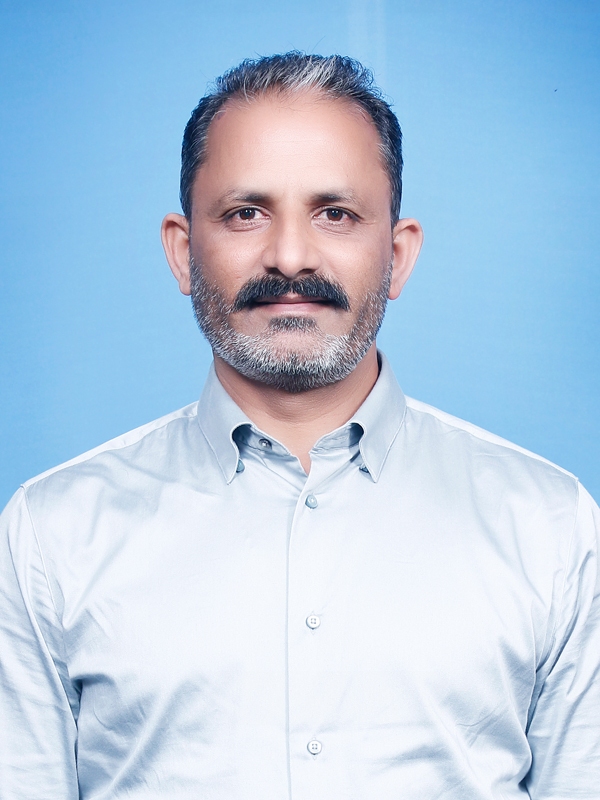
From a Village Bus Stand to a National Movement
Nagaraja B. N., Founder of Baduku Foundation, speaks directly — from the heart of an experience that shaped everything
I want to tell you something before I tell you about Baduku Foundation. I want to tell you about a night in 1977 when I was 21 years old, sitting on a cold concrete bench in a Bengaluru bus stand, watching people come and go, wondering whether I had made the biggest mistake of my life. I had arrived in the city with a Diploma in Mechanical Engineering from Mandya, a small bag of clothes, and the kind of hope that only the very young or the very brave are capable of carrying — the hope that is so fierce it refuses to acknowledge the odds against it.
What I did not have was a place to sleep, money for a meal, or a single person in the city who was truly willing to take me in for more than a few awkward days. I had learned something very quickly that no one had prepared me for: in a city, you are alone in a way that is fundamentally different from being alone in a village. In a village, even poverty is communal. There are neighbours. There is shared food. There is the social fabric of people who know your name and your family. In a city, you are a number. And when you have no money and no address and no job, you are not even that.
I learned that any relative can feed you for a day. For two days, they grow uncomfortable. For three, you see it in their eyes: the calculation, the hesitation, the slow withdrawal of welcome. That is a lesson you never forget.”
I slept in bus stands. I spent afternoons in parks — not because I enjoyed the greenery, but because parks were free and air-conditioned offices were not. I walked miles looking for work, carrying a resume that felt both inadequate and oversized at the same time. Every rejection was a small education. Every door that closed was a lesson in humility and resilience that no classroom had offered. Eventually — and it felt like a long time, though in retrospect it was months, not years — I found my first placement. A small firm in the city. A trainee position. Two years. A monthly stipend of Rs. 1,500. One thousand five hundred rupees. In Bengaluru. At the turn of the millennium. Let me be honest with you: it was not enough. It was never quite enough. But it was a foothold. And with a foothold, a person with any determination at all will find a way to climb.
Those two years as a trainee were, in many ways, the most important of my education. Not because of what I learned about mechanical systems — though I learned a great deal — but because of what I learned about myself. I learned that I could survive under pressure. I learned that skill, when applied consistently and honestly, compounds. I learned that the relationships you build in your first years of work become the architecture of every opportunity that follows. When I moved into sales and marketing with Maruti Suzuki India Limited — working with industrial products and devices, and later expanding into solar energy sales — something fundamental shifted. I discovered that I had a gift for connection. For sitting across from a stranger and quickly understanding not just what they needed but what they feared, what they dreamed of, what would make them say yes. It was a gift that grew with every conversation, every client meeting, every negotiation, every presentation. The solar sector, in particular, opened my eyes. I was travelling across regions, meeting people from every economic stratum, presenting solutions to village cooperatives and ministry officials in the same week. I sat across from state ministers. I presented to industrial groups. I negotiated with procurement officers in air-conditioned boardrooms and with agricultural society leaders under a mango tree. And everywhere I went, I saw the same thing: untapped potential, waiting for someone to show up with the right tools and the right belief.
The Insight That Founded Baduku
In every village I visited for solar sales, I met young people who were as intelligent and capable as
anyone I had met in any corporate office. The difference was not talent. It was access. It was
mentorship. It was the presence or absence of someone who said: here is what you can do, here is
how you do it, and I believe you can do it. That realisation became the foundation of Baduku
Foundation
Driven by everything I had seen and experienced — the skill gaps, the social barriers, the way that talent without opportunity withers — I took the step that felt both terrifying and inevitable: I started my own business. It was not the easiest path. Starting any business involves uncertainty, setbacks, and the particular kind of loneliness that comes from being responsible for both your own livelihood and that of others. But it was also profoundly clarifying.
When I hired my first employees, I found myself thinking not just about their productivity but about their trajectory. These were young men and women who, like me, had come from modest backgrounds, who had navigated their own sets of challenges, and who had arrived at this workplace looking not just for a salary but for a direction. I wanted to give them both.
I began to see my business not just as a commercial enterprise but as a social one — as a space where young people could learn, grow, build confidence, and develop the skills and connections they would carry for the rest of their lives. Each person I employed who stayed, who thrived, who went on to build something of their own — each one was a proof point for the idea that would become Baduku Foundation.
Baduku Foundation did not emerge from a strategic planning process. It emerged from a conversation — with myself, with colleagues, with the memory of that young man in the bus stand, with the faces of the young people in the villages I had visited, with the women I had seen whose potential was so obviously and painfully locked away by circumstance. I kept asking myself: what would have changed everything for me, at nineteen, in that bus stand? The answer was not complicated. A skill that the market valued. A mentor who believed in me. An opportunity that did not require me to abandon everything I was from. And the knowledge that someone had built a pathway for me, that I did not have to find every step myself
That is what Baduku Foundation builds. Not charity. Not sympathy. Not a handout. A pathway. A bridge. A set of tools, a community of support, and the unwavering belief that the person on the other side of that bridge is capable of doing extraordinary things with what we help them access.
“Every village can be a place of pride and prosperity. We do not want our youth to migrate out of compulsion. We want districts to become hubs where the nation looks and says: something extraordinary is happening here. And it is.”
To every young person reading this who is standing at that crossroads — wondering whether to stay or leave, whether their village has anything to offer them, whether their dreams require a city to come true — I want to say this directly and without qualification: your potential is not smaller because of where you were born. Your talent does not require a different geography to bloom. What it requires is the right support, the right skills, and the right opportunity. Baduku Foundation exists to ensure you find all three — right where you are
With gratitude, with purpose, and with deep respect for every community we serve,